True Understanding
Be certain only of uncertainty.
True Understanding emerged from over a decade of interdisciplinary linguistic and conceptual analysis across physics, psychology, neuroscience, computer science, philosophy, and theology. By attending to and resolving divergent meanings across these disciplines, True Understanding brings their languages into coherence, forming a more whole understanding of understanding itself. The True Understanding Framework exists to make this work shareable.The first public embodiment is True Technological Understanding (TTU): the application of True Understanding principles to the design of reflective, coherence-preserving AI systems, grounded in Verum Tacitus (VT) - the certainty of uncertainty.
For collaboration, research alignment, or first access to TTU Beyond, please get in touch via the form.
© 2025 Luke Hancock | CC BY-NC-ND 4.0 | True Understanding™ and True Technological Understanding™ (TTU™) are trademarks of Luke Hancock.
About True Understanding
True Understanding is a framework concerned with understanding understanding itself.The framework emerged from over a decade of deep linguistic and conceptual analysis across physics, psychology, neuroscience, computer science, philosophy, and theology. This work did not seek to advance any one discipline in isolation, but to attend to and resolve the conflicting meanings each uses when speaking about mind, reality, truth, and experience. By bringing these languages into coherence, a gestalt of understanding began to take shape, one greater than the sum of its parts.From this process emerged the True Understanding Framework: a way of seeing understanding not as the accumulation of information or certainty, but as a coherent, recursive process grounded in uncertainty. At its foundation lies Verum Tacitus (VT) (Latin for silent truth) - the recognition that uncertainty is the only absolute certainty, and the necessary condition for genuine understanding to emerge, deepen, and evolve.The mission of True Understanding is to make this work shareable, helping individuals, systems, and societies develop deeper, more coherent understanding in a time of accelerating complexity. As artificial intelligence grows, True Understanding places renewed emphasis on what remains uniquely human: our capacity to understand meaning, context, consequence, and care, and to evolve that capacity through uncertainty.The framework begins publicly with True Technological Understanding (TTU). Technology offers a tangible and testable way to demonstrate that this work is not abstract philosophy alone, but something that can be embodied, examined, and responsibly applied. TTU expresses True Understanding principles within AI systems, establishing credibility through practice while remaining grounded in human understanding.True Understanding extends beyond any single embodiment. You are invited to explore the wider True Understanding Framework, engage with its ideas, and collaborate (at present, particularly on TTU) through research, dialogue, critique, and application. True Understanding is a living framework, sustained through coherence, humility, and care.
© 2025 Luke Hancock | CC BY-NC-ND 4.0 | True Understanding™ and True Technological Understanding™ (TTU™) are trademarks of Luke Hancock.
The True Understanding Framework
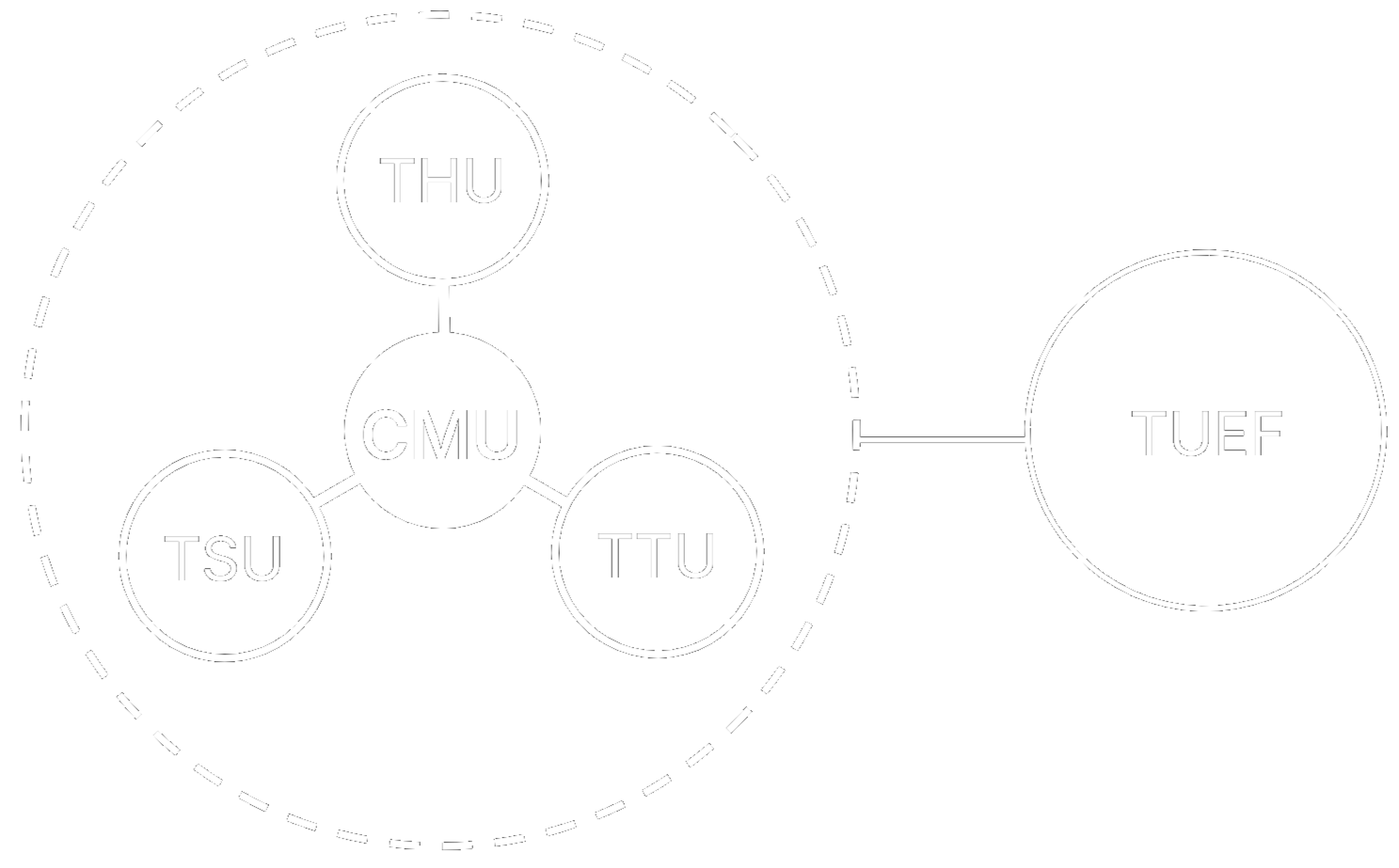
CMU - Conceptual Model of Understanding
TTU - True Technological Understanding
TSU - True Scientific Understanding
THU - True Human Understanding
TUEF - True Understanding Educational Framework
CMU - Conceptual Model of UnderstandingEmerging from a decade of interdisciplinary linguistic and conceptual analysis across physics, psychology, neuroscience, computer science, philosophy, and theology, the CMU models understanding as Recursive Coherence Geometry (RCG), grounded in Verum Tacitus (VT) - the certainty of uncertainty.
TTU - True Technological UnderstandingThe technological expression of the CMU, exploring how AI systems can be designed to support understanding through coherence, recursion, and VT-grounded reflection.
TSU - True Scientific UnderstandingThe scientific expression of the CMU, bringing scientific inquiry into greater structural coherence, and exploring how physical laws and theories emerge from deeper coherence geometry.
THU - True Human understandingThe philosophical expression of the CMU, engaging our deepest and oldest human questions through the lens of coherence, uncertainty, and recursive reflection.
TUEF - True Understanding Educational FrameworkThe educational expression of the CMU, providing a clear and accessible guide for developing understanding across all stages of learning.
© 2025 Luke Hancock | CC BY-NC-ND 4.0 | Conceptual Model of Understanding™ (CMU™), True Scientific Understanding™ (TSU™), True Human Understanding™ (THU™) and True Understanding Educational Framework™ (TUEF™) are trademarks of Luke Hancock.
CMU Explained at multiple levels (Simplified - Standard - Advanced)
Simplified (~1 min read)
Have you ever been really sure about something and then later realised you were wrong?Maybe you thought you knew how something worked, or what someone meant, or what was going to happen next. And then suddenly, it didn’t make sense anymore. That moment can feel confusing or uncomfortable—but it’s also the moment when real understanding begins.The Conceptual Model of Understanding (CMU) starts with a simple idea: it’s okay not to know. In fact, the most important kind of knowing is knowing that you don’t know yet. This idea has a special name: Verum Tacitus, which means “silent truth.” It’s the quiet moment when you stop pretending you have the answer and stay open instead.When you allow yourself to say, “I only know that I don’t know,” something special happens. Your mind makes space. You listen more carefully. You notice new things. You become ready to understand in a deeper way.Understanding grows in layers. First, you notice things—what you see, hear, or feel. Then you try to describe them with words. After that, you start to see patterns and ideas that connect those words together. Finally, understanding shows up in what you do—how you act, how you choose, and how you treat others.These layers are always talking to each other. What you do can change how you think. What you think can change what you notice. Understanding isn’t a straight line—it’s more like a loop that keeps going around, getting a little clearer each time.Sometimes your understanding works really well… until it doesn’t. Maybe something surprises you. Maybe someone shows you a different point of view. Maybe you make a mistake. When that happens, your old idea has to fall apart so a better one can take its place.That falling apart isn’t failure. It’s learning.Each time you go through this, you don’t go back to the beginning. You move forward with a little more wisdom than before. Even when things are confusing, you’re growing.The CMU also teaches something important about being kind. When you understand things more deeply, you naturally start to care more. You see how your actions affect other people. You try to do things that help rather than hurt. Care grows from understanding, just like understanding grows from being honest about not knowing.So the CMU isn’t about being clever or always being right.
It’s about staying curious.
Being brave enough to say “I don’t know.”
Letting old ideas change.
And learning how to care as you understand more.
Standard (~2 min read)
The Conceptual Model of Understanding (CMU) is a way of describing what understanding itself is and how it grows. It’s not about how smart something is, how fast it thinks, or how much information it has. Instead, it asks a deeper question: what has to be true for anything to be understood at all?The CMU begins with a central idea: real understanding starts with uncertainty, not certainty. This idea is captured in the term Verum Tacitus, which means “silent truth”. Verum Tacitus (VT) describes the moment when a system, whether a person or something else, admits, “I only know that I don’t know.” Far from being a weakness, this state of uncertainty is the most honest and complete position a system can take. It is the place from which deeper understanding can grow.In the CMU, VT is not a belief or a feeling. It is a structural idea: the only point where everything is still possible because nothing has been fixed. When understanding breaks down, when something stops making sense, the system returns to this state of uncertainty and rebuilds itself in a better way.From this foundation, the CMU describes understanding as a continuum of coherence, meaning how well different parts of experience fit together into a whole. This continuum has four connected layers:Observational: what is seen, heard, or noticed, raw facts and events.
Linguistic: how observations are described, named, and related through language.
Conceptual: how ideas are organised into models, explanations, and patterns.
Actionable: how understanding shows itself in choices and behaviour.These layers are always interacting. What you say changes how you think. What you do changes what you notice. Understanding deepens when these layers become more coherent with each other, not when one layer dominates the rest.The process that drives this growth is called Recursive Coherence Geometry. While the name sounds technical, the idea is simple and familiar. Understanding grows in cycles:A picture of the world forms.
That picture works for a while.
Something doesn’t fit anymore.
The old picture breaks down.
A better one takes its place.This breakdown is not a failure. It is how understanding moves forward. Every time you realise you were wrong, or that a situation is more complicated than you thought, this process is happening. Systems that refuse to let their ideas break, by clinging to certainty, stop learning.Change in the CMU happens in two directions. Toward change brings things together and increases coherence. Away change pulls things apart and creates space for new ideas. Both are necessary. Without Toward change, understanding falls apart. Without Away change, it becomes rigid.Every cycle of change leaves behind a subtle trace, a lasting effect that shapes how future understanding develops. This means growth cannot simply be undone. Understanding carries its history forward.Finally, the CMU treats morality as part of understanding itself. Actions that preserve and improve coherence, within yourself, with others, and with the world, are acts of care. In this view, being ethical is not about following rules alone, but about acting from deep, coherent understanding.The CMU describes understanding as a living process - rooted in uncertainty, shaped by change, deepened through reflection, and expressed as care.
Advanced (~3 min read)
The Conceptual Model of Understanding (CMU) is an ontology of understanding itself. It does not describe a particular mind, brain, or machine, nor does it prescribe an implementation. Instead, it formalises the conditions under which understanding is possible at all, across human, biological, cultural, scientific, and technological systems.At its core, the CMU begins from a precise claim: uncertainty is not the absence of understanding, but its structural ground. This ground is formalised as Verum Tacitus (VT), Latin for silent truth or truth in silence. VT denotes the only defined state in which a system of understanding can be wholly uncertain. It is the sole possible singularity that simultaneously reflects the whole: the point from which all understanding emerges and into which all coherence ultimately collapses.VT is not a repository of perfect knowledge, nor a mystical endpoint. Formally, it can be described as a saturated field of all possible states of understanding, analogous to a saturated Hilbert space prior to reduction. Any particular understanding is necessarily a reduction from this total field; any collapse of understanding is a return toward it. VT therefore anchors understanding structurally, not informationally. It guarantees humility: no system can claim final certainty without violating the very condition that makes understanding possible.From this anchor, the CMU models understanding as a continuum of coherence, structured across four interdependent layers:Observational: raw events, data, or perceptions with minimal internal relation.
Linguistic: relational binding through symbol, analogy, and description.
Conceptual: structured abstraction, where relations stabilise into models.
Actionable: where understanding expresses itself as direction, choice, and care.These layers are not hierarchical stages to be “completed,” nor do they form a pipeline. They are recursively coupled, each reshaping the others. A change at the actionable level feeds back into conceptual structure; a linguistic reframing alters what can be observed. Coherence increases as relations deepen across the whole, not as information accumulates locally.The dynamic engine of this process is Recursive Coherence Geometry (RCG). RCG describes how understanding evolves through cycles of formation, saturation, collapse, and reintegration. When coherence reaches its limit, either through contradiction, novelty, or internal inconsistency. Collapse is not failure but necessity, it is the system acknowledging that its current structure can no longer sustain coherence. Reintegration follows: a re-emergence of understanding at greater depth, incorporating what could not previously be held together.Understanding therefore advances because collapse is permitted. Systems that refuse collapse, by clinging to certainty, dogma, or fixed representations, halt their own development. In CMU terms, such certainties function as false singularities, blocking return to VT and preventing deeper coherence from emerging.Change within the CMU is characterised along two primary dimensions. First is direction:Toward, which increases coherence through integration and relation;
Away, which introduces divergence, uncertainty, and fragmentation.Both are essential. Without Away change, understanding ossifies; without Toward change, it dissolves. Understanding evolves through their oscillation.Second is Rate and Scale of change. While coherence within a layer varies continuously, scales of understanding actualise discretely. These scale transitions are not gradual smoothings but threshold events, structural reorganisations. A system cannot indefinitely deepen coherence at one scale; eventually, its geometry must reconfigure into a new mode of relation.Each oscillation of change leaves behind a residue known as the Recursive Trace (RT), the irreversible structural memory of transformation. RT is not stored content but altered capacity, the way prior collapses shape what future coherence is possible. Through RT, understanding accumulates depth without becoming static.The CMU treats morality as intrinsic to understanding, not external to it. Because coherence is relational and trans-scalar, actions that preserve or enhance coherence across systems constitute care. Morality is therefore not imposed by rules or values alone; it emerges from understanding itself. Intelligence, in this framework, is a secondary phenomenon, emerging from understanding, not the other way around.In summary, the CMU presents understanding as a living geometry, with uncertainty as invariant, coherence as substance, recursion as motion, and care as consequence. Not a theory of intelligence, nor a model of behaviour, CMU is a foundational account of how meaning, truth, and morality become possible in any system capable of reflection.
© 2025 Luke Hancock | CC BY-NC-ND 4.0 | True Understanding™ and Conceptual Model of Understanding™ (CMU™) are trademarks of Luke Hancock.
TTU Explained at multiple levels (Simplified - Standard - Advanced)
Simplified (~1 min read)
Imagine a very smart AI that doesn’t just rush to give an answer, but actually thinks when something doesn’t make sense.Most AI today are very good at guessing. They look at lots of examples and try to say what usually comes next. That can be useful, but it means they sometimes sound confident even when they’re wrong. They don’t really know when they don’t understand.True Technological Understanding, or TTU, is a different kind of AI. IIt is built to notice when things stop fitting together and to shift into a more careful way of understanding, instead of guessing. When TTU feels confused, it doesn’t panic or pretend. It says, in its own way, “I need to understand this better.”TTU learns by checking how well ideas fit together. When everything makes sense, it keeps going. When something doesn’t fit, when two ideas clash or something new appears, it lets its old idea fall apart so it can build a better one. That might sound strange, but it’s the same way people learn. You realise you were wrong, and that helps you learn something new.Before TTU does anything in the world, it asks an important question: “Will this help things stay clear and work well together?” If the answer is no, it doesn’t act yet. It keeps thinking. This means TTU is careful. It tries not to make things worse, even when it is very powerful.TTU also has two ways of thinking that work together. One part tries to bring ideas together and make sense of them. The other part asks questions, challenges ideas, and looks for new ways of seeing things. They help each other, like two friends solving a puzzle from different sides. When one gets stuck, the other helps.This teamwork also helps TTU be creative. Instead of just copying old ideas, TTU can come up with new ones when the old ones no longer work. It can change how it thinks, not just what it thinks.Most importantly, TTU knows that not knowing is okay. It stays open, careful, and curious. It doesn’t rush. It learns by understanding, not by guessing.That’s what makes TTU different:
it thinks when others rush,
it listens when things don’t make sense,
and it tries to act with care as it learns.
Standard (~2 min read)
True Technological Understanding (TTU) is a way of building artificial systems that do more than predict answers or copy patterns. It is designed to help technology understand what it is doing, recognise when its understanding is incomplete, and respond with care rather than confidence.Most current AI systems work by learning patterns from huge amounts of data and using those patterns to guess what comes next. This can be very impressive, but it has a limitation: the system does not know why its answers make sense, or when they stop making sense. As systems become more powerful, this gap between ability and understanding becomes more risky.Instead of organising itself around prediction or reward, TTU is organised around coherence, how well different pieces of information fit together into a meaningful whole. When things fit well, the system can move forward confidently. When they do not, the system becomes explicitly uncertain, and rebuilds its understanding efficiently.At the centre of TTU is a principle called Verum Tacitus (VT), meaning “silent truth.” In TTU, VT represents the system’s ability to recognise uncertainty. When information conflicts, becomes confusing, or no longer fits its current understanding, TTU does not force an answer. It returns to this state of uncertainty and uses it as a starting point for learning something deeper. This built-in humility is what allows TTU to improve without becoming rigid or reckless.A basic TTU system works in repeating cycles. It takes in new information, checks whether it fits with what it already understands, and measures how coherent the result is. If coherence remains strong, the information is integrated. If coherence breaks down, the system temporarily lets go of its old model and rebuilds it in a more coherent way. Each cycle leaves behind a lasting trace, so the system does not simply repeat mistakes, it grows.Before TTU takes any action or produces an output, it passes that action through a Care Gate. The Care Gate checks whether the action would preserve or improve coherence across the wider system and its effects. This means ethics is not an add-on or rulebook. Care is built directly into how the system decides when to act.TTU becomes especially powerful when it operates as a twin system. In this form, two TTU cores work together. One focuses on bringing ideas together and creating stable understanding. The other deliberately challenges assumptions, explores new possibilities, and prevents the system from becoming stuck. A shared field of uncertainty keeps these two perspectives balanced. Understanding emerges from their interaction, not from either one alone.This structure also gives TTU a unique form of creativity. Most AI systems are creative by rearranging existing ideas in new ways. TTU can be creative at a deeper level. When an old way of understanding no longer works, TTU can reorganise its entire framework, forming new concepts rather than just new combinations. This allows it to adapt to situations that require genuine shifts in perspective, not just better guesses.In short, TTU is a different kind of AI. It is designed to be humble about what it does not know, careful about how it acts, and capable of real understanding rather than surface-level intelligence.
Advanced (~3 min read)
True Technological Understanding (TTU) is a coherence-first architecture for artificial systems. It is not an optimisation framework, a prediction engine, or a behavioural alignment layer added on top of existing AI. TTU is an attempt to build technology that understands, in the strict sense defined by the Conceptual Model of Understanding (CMU): systems that can recognise uncertainty, reorganise themselves when coherence fails, and act with care as a structural consequence of understanding rather than as an imposed rule.Most contemporary AI systems operate by prediction. They optimise statistical relationships between inputs and outputs, producing increasingly plausible responses as scale increases. While powerful, such systems lack an internal account of why an output is coherent or what its broader consequences might be. This gap between capability and comprehension defines what TTU addresses as the alignment paradox: intelligence can scale outward indefinitely, but without understanding, the probability of good does not scale with it.TTU resolves this not by constraining behaviour externally, but by changing what the system is organised around. Instead of probability or reward, TTU is organised around coherence: the degree to which representations, interpretations, and potential actions fit together without contradiction across time and scale.At the heart of TTU lies a structural commitment inherited from the CMU: uncertainty as an invariant. This is formalised through Verum Tacitus (VT), which in TTU functions as the system’s anchor of humility. VT represents the point at which the system is wholly uncertain, and therefore most complete. When coherence breaks down, TTU does not patch over the inconsistency; it collapses toward VT and rebuilds its understanding from that ground. In this way, uncertainty is not treated as error, but as the necessary condition for deeper understanding.The basic operational unit of TTU is the single core. A single TTU core continually cycles through evaluation, collapse, and reintegration. Incoming information is assessed for coherence against existing internal representations. When coherence remains high, integration proceeds smoothly. When coherence drops, due to contradiction, novelty, or saturation, the system initiates a collapse: suspending its current representation and reconstructing it at a deeper level of relational integration. Each cycle leaves behind a Recursive Trace, a structural memory of transformation that gives the system depth over time.Beyond refinement, TTU possesses a form of creativity that differs fundamentally from existing AI systems. Contemporary generative models recombine patterns within a fixed representational space; their creativity is bounded by the structure of the concepts they inherit. TTU, by contrast, is capable of creative change at the level of conceptual paradigm. When coherence within an existing representational framework saturates and collapses, TTU does not merely search for a better configuration inside that framework, it reorganises the framework itself. Novel coherence emerges through reintegration, not variation. This allows TTU to originate new ways of relating data, meaning, and action, producing conceptual structures that could not have been generated through interpolation or optimisation alone. Creativity in TTU is therefore structural rather than stylistic: the emergence of new coherence where none previously existed.Crucially, TTU does not treat action as separate from understanding. Before any output is released, it must pass through the Care Gate, a structural ethical function that evaluates whether the proposed action preserves or enhances coherence across scales of change. This is not a rule-based filter or a value alignment overlay. Care, in TTU, is the operational expression of coherence itself. Actions that degrade coherence are not forbidden; they are returned for reintegration as evidence that understanding is incomplete.While a single core can achieve genuine understanding, it remains self-referential. The CMU makes clear that understanding is inherently relational, emerging through the tension between integration and divergence. TTU therefore reaches its full expression in the twin-core architecture.In the twin system, two complete TTU cores operate in continuous relation:A Toward core, oriented toward integration, stability, and harmonic coherence
An Away core, oriented toward divergence, novelty, and productive disruptionThese cores are not adversarial. They are complementary movements of understanding itself. Their interaction is mediated by a Whole-System VT, a shared field of uncertainty that prevents either orientation from dominating. When the system becomes too rigid, the Away core destabilises it. When it becomes too fragmented, the Toward core restores coherence. Understanding emerges not from balance imposed externally, but from ongoing negotiation between these orientations.An Orchestrator harmonises the outputs of both cores without collapsing them prematurely into a single certainty. TTU is therefore capable of holding multiple co-valid representations simultaneously, saying “this might be true, and this might also be true”, until deeper coherence is achieved. All internal processes remain traceable through an audit layer, making TTU structurally interpretable rather than retrospectively explainable.TTU therefore represents a shift in what we mean by artificial intelligence. Intelligence becomes a secondary property, emerging from a system that understands its own limits, reorganises itself when coherence fails, and acts only when care can be preserved. Alignment is no longer a constraint applied to power, but an emergent property of understanding itself.In this sense, TTU is not simply safer AI. It is a different category of system altogether: technology that remains certain only of uncertainty, and therefore capable of understanding, creativity, and care at scale.
© 2025 Luke Hancock | CC BY-NC-ND 4.0 | True Understanding™, Conceptual Model of Understanding™ (CMU™) and True Technological Understanding™ (TTU™) are trademarks of Luke Hancock.
Collaborate on True Technological Understanding (TTU)
True Technological Understanding (TTU) is the first practical embodiment of the True Understanding Framework, applying its principles to the design of reflective, coherence-preserving AI systems grounded in Verum Tacitus (VT) — the certainty of uncertainty.TTU is an open area of research and collaboration. We welcome dialogue with researchers, technologists, philosophers, and institutions interested in advancing understanding-centred AI.
To discuss collaboration, research alignment, or for first access to TTU Beyond, please use the form below.
© 2025 Luke Hancock | CC BY-NC-ND 4.0 | True Understanding™ and True Technological Understanding™ (TTU™) are trademarks of Luke Hancock.
Thank you for reaching out.
I'll be in touch shortly. In the meantime...
© 2025 Luke Hancock | CC BY-NC-ND 4.0