True Understanding
True Understanding emerged from a process of resolving definitional divergences across domains including Physics, Psychology, Neuroscience, Computer Science, and Philosophy. Over time, this process appeared to reveal recurring structural patterns in how understanding forms and evolves across different contexts.From this emerged the True Understanding Framework: a developing framework exploring understanding across scientific, technological, human, and educational domains.
© 2025 Luke Hancock | True Understanding™
True Understanding Framework
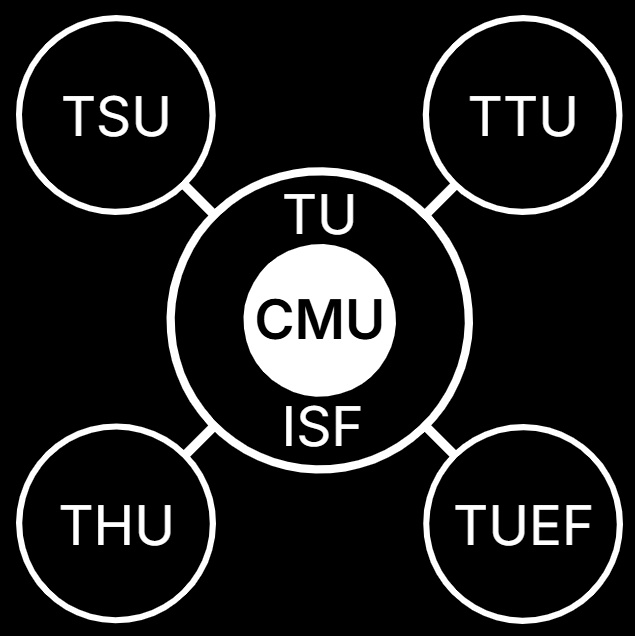
The True Understanding Framework explores how understanding emerges and develops across different domains. It begins with the Conceptual Model of Understanding (CMU), a foundational model exploring the structure and dynamics of understanding itself.From the CMU emerged a series of expressions exploring the framework through formal (TU-ISF), scientific (TSU), technological (TTU), human (THU), and educational (TUEF) perspectives.
Conceptual Model of Understanding (CMU)
The CMU forms the conceptual foundation of TU. It explores first principles relating to uncertainty, coherence, context, possibility, and the emergence of understanding across different domains and scales.
TU Invariant Structural Framework (TU-ISF)
A formal structural expression exploring invariant relationships underlying coherence, contextual constraint, and irreversibility across different regimes.
True Scientific Understanding (TSU)
A scientific expression exploring how existing scientific theories and observations may be interpreted through the structural dynamics explored within TU.
True Technological Understanding (TTU)
A technological expression exploring understanding-oriented systems, interpretability, uncertainty preservation, and coherent decision structures.
True Human Understanding (THU)
A human and philosophical expression exploring meaning, identity, uncertainty, development, and human experience.
True Understanding Educational Framework (TUEF)
An educational expression exploring learning, development, conceptual progression, and the cultivation of understanding across contexts.
© 2025 Luke Hancock | True Understanding™
Conceptual Model of Understanding (CMU)
The Conceptual Model of Understanding (CMU) forms the conceptual foundation of the True Understanding Framework. It explores the possibility that understanding possesses recurring structure and dynamics across different domains and scales.The CMU examines relationships between uncertainty, possibility, context, coherence, and the emergence of understanding, providing the conceptual foundation from which the wider TU framework developed.
CMU Foundations
The CMU describes understanding as the following recursive process:Uncertainty → Possibility → Context → Coherence → Actualisation → Irreversibility → UncertaintyUncertainty — the condition from which possibility emerges.
Possibility — different outcomes are open.
Context — conditions constrain possibility.
Coherence — possibility organises into stable relational structure.
Actualisation — one possibility becomes reality.
Irreversibility — what becomes reality changes what remains possible.From this perspective, understanding is not the accumulation of information. It is the ongoing emergence of coherent structure from uncertainty, under the constraints of context and irreversible consequence.The full CMU paper on Zenodo explores these ideas in greater depth and provides the conceptual foundation for the wider True Understanding Framework.
CMU FAQs
Is CMU a philosophical or scientific theory?CMU is best understood as a conceptual framework, exploreing whether understanding itself has recurring structure and dynamics that appear across different domains, from everyday decision-making to science, technology, and education.Why does CMU begin with uncertainty?CMU proposes that understanding does not emerge from certainty. It emerges from uncertainty. Possibilities remain open, context shapes what is possible, coherence emerges, and actualisation produces irreversible consequence.Why does CMU matter?If understanding follows recurring structure, then similar principles may appear across many different domains. CMU explores whether this can provide a common conceptual foundation for fields that are often studied separately.What will I find in the full CMU paper?The paper introduces the foundations of CMU in greater depth, including uncertainty, coherence, possibility, context, actualisation, and Irreversibility, along with the reasoning that led to the wider True Understanding Framework.
© 2025 Luke Hancock | True Understanding™
TU Invariant Structural Framework (TU-ISF)
TU-ISF is the formal structural expression of the True Understanding Framework. While the CMU describes how understanding emerges, TU-ISF explores the invariant relationships that appear to remain stable across different domains, scales, and formal systems.
TU-ISF Foundations
TU-ISF explores the structural relationships that emerge from the same foundations described by the CMU:Uncertainty — the condition from which possibility emerges.
Possibility — different outcomes are open.
Context — conditions constrain possibility.
Coherence — possibility organises into stable relational structure.
Actualisation — one possibility becomes reality.
Irreversibility — what becomes reality changes what remains possible.TU-ISF examines how these relationships may persist or transform across different domains and scales. Its central interest is the search for invariant structural relationships beneath differences in domain language and representation.The full TU-ISF paper on Zenodo develops these foundations in greater depth, introducing the formal principles and structural relationships that connect the wider expressions of the True Understanding Framework.
TU-ISF FAQs
Do I need a mathematics or science background to read TU-ISF?No. TU-ISF explores structural relationships using plain-language concepts before introducing any formal discussion. While some sections become more technical, the central ideas are intended to be accessible to readers from a wide range of backgrounds.Is TU-ISF trying to replace existing mathematics, logic, or science?No. TU-ISF is an interpretive structural framework. Its purpose is to explore patterns and relationships that may appear across different domains while remaining compatible with established formal systems and scientific disciplines.What does TU-ISF mean by "invariant relationships"?An invariant relationship is a pattern that remains recognisable even when the subject matter changes. TU-ISF explores whether concepts such as context, constraint, coherence, actualisation, and consequence may share common structural features across different fields of inquiry.How is TU-ISF different from the CMU?The CMU describes understanding as a recursive process emerging from uncertainty. TU-ISF examines the formal structural relationships that arise within that process. In simple terms, the CMU asks how understanding emerges, while TU-ISF explores what structural patterns remain stable within that emergence.What will I find in the full TU-ISF paper?The paper develops the foundations introduced here in greater depth, exploring structural invariants, formal relationships, contextual constraint, coherence, actualisation, and irreversible consequence. It provides the formal foundation that supports the wider scientific, technological, educational, philosophical, and human expressions of the True Understanding Framework.Why do similar patterns seem to appear in very different fields?TU-ISF begins with the possibility that some relationships may be more fundamental than the domains in which they appear. The paper explores this question and the implications it may have for understanding coherence across different forms of knowledge.
© 2025 Luke Hancock | True Understanding™
True Scientific Understanding (TSU)
TSU is the scientific expression of the True Understanding Framework. It explores how existing scientific theories and observations may be interpreted through the structural dynamics of understanding, coherence, uncertainty, and irreversibility.TSU does not seek to replace existing science. It offers an interpretive perspective that aims to remain compatible with established scientific knowledge while exploring deeper questions about why stable structures, lawful behaviour, and irreversible processes appear throughout nature.
TSU Foundations
TSU explores how scientific phenomena may be interpreted through the same foundations described by the CMU and the invariant structural relationships formalised within TU-ISF:Uncertainty — the condition from which possibility emerges.
Possibility — different outcomes are open.
Context — conditions constrain possibility.
Coherence — possibility organises into stable relational structure.
Actualisation — one possibility becomes reality.
Irreversibility — what becomes reality changes what remains possible.The stability of matter, the emergence of complex systems, the transition from quantum uncertainty to classical behaviour, and the apparent direction of time can all be understood as different expressions of coherence emerging under constraint.In this view, irreversibility is not just something that happens within the universe. It is part of how stable structure becomes possible in the first place.TSU therefore explores science not as a collection of disconnected theories, but as a family of descriptions operating across different scales of coherent organisation.The full TSU paper on Zenodo explores these ideas in greater depth, examining topics such as quantum measurement, classical stability, entropy, probability, and the arrow of time, while remaining fully compatible with established scientific practice and observation.
TSU FAQs
Does TSU propose a new scientific theory?No. TSU does not seek to replace existing scientific theories or observations. It explores whether familiar scientific phenomena may be viewed through a common interpretive framework centred on uncertainty, coherence, and irreversibility.Why connect science with understanding?Science helps us describe how the world behaves. TSU explores whether the emergence of stable structure throughout nature may share deeper patterns with the emergence of understanding itself.What kinds of scientific topics does TSU explore?The TSU papers discuss topics such as quantum measurement, probability, entropy, classical stability, and the arrow of time. The aim is not to redefine these concepts, but to explore possible connections between them through a common structural lens.Do I need a scientific background to read TSU?No. While some sections engage with scientific concepts, TSU is written to be accessible to curious readers from a wide range of backgrounds. The focus is on ideas and interpretation rather than advanced mathematics.Where should I start if I want to learn more?The TSU paper on Zenodo provides a fuller introduction to the framework, its foundations, and its interpretation of scientific phenomena. It is designed to build gradually from first principles and can be read alongside the wider True Understanding Framework.Why does time seem to move in one direction?One of the questions explored within TSU is whether the apparent direction of time is connected to the irreversibility when possibilities become reality. The full paper on Zenodo examines this idea in greater depth and its relationship to entropy, measurement, and stability.
© 2025 Luke Hancock | True Understanding™
True Technological Understanding (TTU)
True Technological Understanding (TTU) is the technological expression of the True Understanding Framework. It explores systems oriented toward understanding, interpretability, contextual coherence, and uncertainty-aware decision structures.Rather than optimising solely for output generation, TTU explores architectures capable of preserving plurality, withholding premature collapse, and structuring action under contextual constraint and interpretive care.
TSU Foundations
TTU emerges from the same foundational principles described by the CMU and formalised through TU-ISF:Uncertainty — the condition from which possibility emerges.
Possibility — different outcomes are open.
Context — conditions constrain possibility.
Coherence — possibility organises into stable relational structure.
Actualisation — one possibility becomes reality.
Irreversibility — what becomes reality changes what remains possible.From a TTU perspective, technological systems should not simply generate answers or optimise toward predefined objectives. They should remain aware of uncertainty, preserve meaningful alternatives where appropriate, recognise the role of context, and act with regard for the consequences their actions create.This leads to a different technological emphasis. Rather than treating uncertainty as a problem to eliminate as quickly as possible, TTU explores systems capable of working with uncertainty responsibly, seeking coherence before commitment, preserving plurality where closure is unjustified, and withholding action when understanding remains insufficient.Interpretability, transparency, and care therefore become structural requirements rather than optional features. Actions should be contextual and proportionate to the coherence available, while remaining open to revision when new understanding emerges.The full TTU paper on Zenodo explores these principles in greater depth, outlining how systems oriented toward understanding may differ from conventional optimisation-driven approaches and how uncertainty, coherence, plurality, and care can be incorporated into technological design.
TTU FAQs
How is TTU different from conventional AI?Many AI systems are designed primarily to optimise for prediction, performance, or output generation. TTU explores a different emphasis: preserving uncertainty where appropriate, maintaining meaningful alternatives, supporting interpretation, and ensuring that action remains proportional to available understanding.Does TTU replace existing AI technologies?No. TTU is not intended as a replacement for existing technologies. It provides a different perspective on how technological systems may be designed, evaluated, and governed, particularly in situations where uncertainty, complexity, and consequence are important.Why does TTU place so much importance on uncertainty?From a TTU perspective, uncertainty is not simply a lack of information. It is the condition from which understanding emerges. Systems that recognise uncertainty may be better able to preserve alternatives, avoid premature conclusions, and respond more appropriately to changing contexts.Can a system decide not to act?TTU explores the possibility that, in some situations, the most coherent response may be to seek further understanding before acting. Rather than treating every uncertainty as something that must be resolved immediately, TTU considers when withholding may be the more responsible outcome.What does the full TTU paper cover?The paper explores the foundations, principles, and architecture of understanding-oriented technological systems in greater depth. It examines concepts such as plurality preservation, contextual coherence, interpretability, withholding, care, and the relationship between understanding and technological action.
© 2025 Luke Hancock | True Understanding™
Coming soon
© 2025 Luke Hancock | True Understanding™